

Free delivery in Europe (EU Zone) from €75*
10% discount on your first order!
Delivery costs from 4.50€*
Free delivery in Europe (EU Zone) from €75*
10% discount on your first order!
Delivery costs from 4.50€*

( €2,461.80 U )
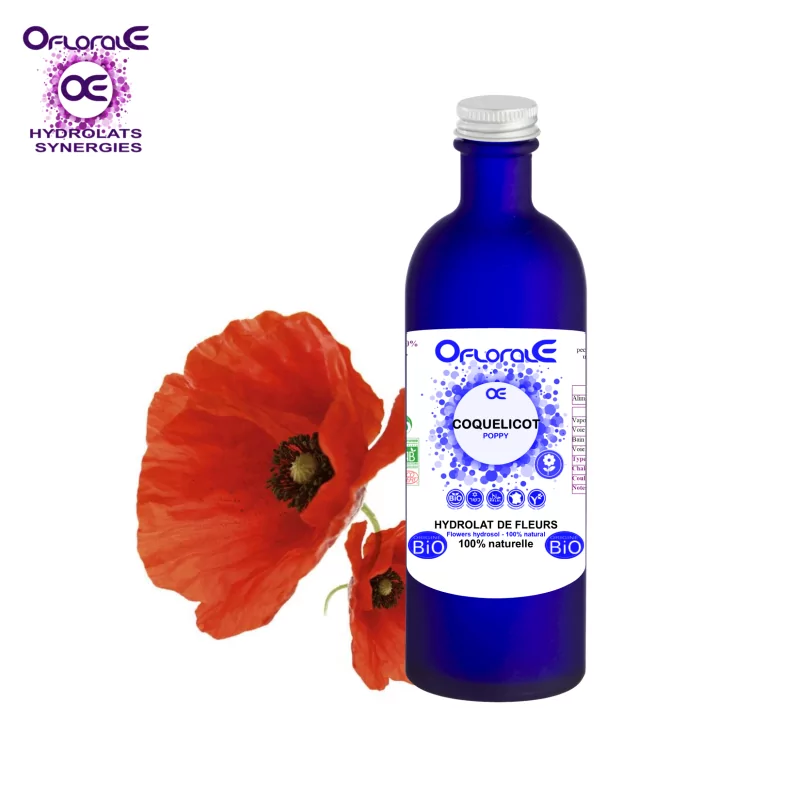
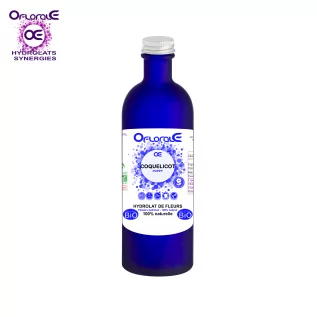
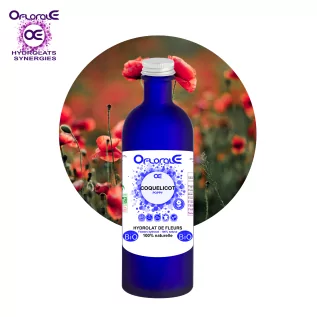
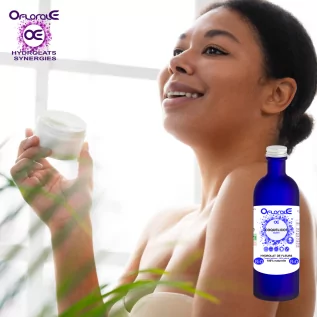
OFLORALE's Poppy Hydrosol (Papaver rhoeas) is obtained from organically grown poppy petals. This hydrosol is known for its soothing and softening properties, ideal for sensitive skin and relaxing treatments. It is also used in cosmetics for its moisturizing and regenerating properties.
INCI: Papaver Rhoeas floral water
French production
Marketed formats: 100ml, 200ml in PETG bottles or option: blue “floral water” type pharmaceutical glass with or without pump
Other formats: 500ml and 1 litre in VERAL type PET pharma bottle and in 5 litre, 10 litre, 20 litre and 50 litre cans
 Safety guarantees- Several payment methods
 Returns policy- 14 days to return your products*
 Technical documents- Subject to purchase conditions*
Our Privacy Policy explains our principles when it comes to the collection, processing, and storage of your information. This policy specifically explains how we employ cookies, as well as the options you have to control them.
Cookies are small pieces of data, stored in text files that are stored on your computer or other device when websites are loaded in a browser. They are widely used to "remember" you and your preferences, either for a single visit or for multiple repeat visits
We use cookies for a number of different purposes. Some cookies are necessary for technical reasons; some enable a personalized experience for both visitors and registered users; and some allow the display of advertising from selected third party networks.
Visitors may wish to restrict the use of cookies or completely prevent them from being set. If you disable cookies, please be aware that some of the features of our service may not function correctly
We only collect information about you if we have a reason to do so-for example, to provide our services, to communicate with you, or to make our services better.
We are committed to maintaining the trust and confidence of our website visitors. We do not collect, sell, rent or trade email lists or any data with other companies and businesses. Have a look at our Privacy Policy page to read detail information on when and why we collect your personal information, how we use it, the limited conditions under which we may disclose it to others and how we keep it secure.
We may change Cookies and Privacy policy from time to time. This policy is effective from 24th May 2018.
The poppy, a symbol of delicacy and peace, has been used since ancient times for its calming properties. In hydrosol form, it offers incomparable softness to the skin and helps soothe agitated minds. Its composition, rich in mucilages and alkaloids, gives it moisturizing, softening and soothing properties, perfect for dry and irritated skin.
Poppy petal: An ally for the skin and the mind
The poppy is an emblematic plant of the fields. The hydrosol extracted from its petals is ideal for soothing and relaxing treatments. It calms irritations, deeply moisturizes and helps restore the elasticity of the skin. In aromatherapy, it is used to promote sleep and relax the mind.
Botanical characteristics and production
Benefits of poppy hydrosol
Examples of use
In cosmetics:
For health:
Emotional well-being
Conservation :
Store in the refrigerator, use quickly after opening.
General works on medicinal plants and aromatherapy:
Disclaimer: The information contained in this sheet is provided for information purposes only and cannot replace medical advice. OFLORALE, aromacentre.fr and SAS LPBE decline all responsibility for the use that could be made of this information.
Production method:
Our distillation method complies with the rules of distillation to obtain hydrolates and not essential oils, the aim being to obtain superior quality hydrolates in no way equivalent to the residues of distillation of plants to obtain essential oil.
Please note that we work with fresh, dried plants or extracts with an equivalence ratio of 1:1 (1 liter of water for an equivalent of 1 kg of fresh plants)
Note that most of the hydrosols and/or floral water available commercially are the result of the distillation residues of essential oils, therefore much poorer in active ingredients than our hydrosols, because our goal is not to impoverish the plant in order to extract a maximum of oil from it by using ratios much higher than 1:1.
Availability and deadlines
As our range is wide, we manage some of the products in stock and others on order.
- Product in stock: Fast delivery time of 3 to 4 days on average
- Made to order: Average lead time 7 to 15 days
We remind you that we are the producers of our hydrosols.
Quality and origin
We raise awareness among our producers about the importance of ECONOMICAL organic agriculture in accordance with the laws of Nature for the respect of the plant world. We primarily promote the development of products from organic agriculture.
Organic* agriculture
Origin of controlled organic farming:
- Certified AB, ECOCERT or BIO Europe, for food products.
- Certified BIO Cosmetic or CosmeBio, for cosmetic products or for room fragrance diffusion.
No use of herbicides, fungicides, pesticides and synthetic chemical fertilizers. For essential oils and hydrosols: hydrodistillation or slow steam distillation for optimal preservation of active ingredients and olfactory components. Some plant origins are wild and not cultivated, so in principle they are organic and certified as such.
Conventional Agriculture
Formerly called: Traditional Agriculture. These are often producers who respect nature and have a traditional knowledge of the art of traditional cultivation. These professionals often work "the old way" and are sometimes located in countries where organic certification does not exist. We can only refer to a general term "Conventional Agriculture" because we are not allowed to refer to plants as being grown without synthetic chemistry if the cultivation is not controlled.
From wild plants
Products subject to this designation come from plants that often exist only in the wild.
Origine BiO is our internal label, guaranteeing that all certified products have already obtained a recognized organic certification. However, we have chosen not to depend on national labels, because we believe that they exercise a monopoly that is often unfair. For us, these certifications do not faithfully reflect the reality of the markets that frame these products. In addition, the labeling criteria vary from one country to another, creating imbalances between producers and distorting the notion of equality. With Origine BiO , we aim to offer a fairer and more consistent alternative.
Data sheet
Specific References
Il n’y a pas de différence technique : ce sont tous deux des eaux issues de la distillation à la vapeur d’une plante. "Eau florale" désigne en général l’hydrolat issu d’une fleur (rose, camomille…), tandis que "hydrolat" peut aussi concerner les feuilles, écorces ou racines.
Vous pouvez nous contacter par mail à tout moment à l'adresse : contact@aromacentre.fr
Ou nous contacter par le formulaire de contact du site : FORMULAIRE
Les eaux florales s’emploient comme lotion tonique, brume rafraîchissante, compresse apaisante ou base de soins maison. Elles sont idéales pour les peaux sensibles, les bébés et l'hygiène douce.
Vous pouvez nous contacter par mail à tout moment à l'adresse : contact@aromacentre.fr
Ou nous contacter par le formulaire de contact du site : FORMULAIRE
Oui, tous nos hydrolats sont obtenus par distillation à la vapeur, sans ajout de conservateurs, alcool, arômes ou stabilisants. Ils sont non dilués et garantis 100 % purs et naturels.
Vous pouvez nous contacter par mail à tout moment à l'adresse : contact@aromacentre.fr
Ou nous contacter par le formulaire de contact du site : FORMULAIRE
Avant ouverture, un hydrolat se conserve jusqu’à 18 mois dans un endroit sec. Après ouverture, il est conseillé de le garder au réfrigérateur et de l’utiliser dans les 3 à 6 mois.
Vous pouvez nous contacter par mail à tout moment à l'adresse : contact@aromacentre.fr
Ou nous contacter par le formulaire de contact du site : FORMULAIRE
Un hydrolat périmé peut présenter une odeur aigre, un aspect trouble ou des résidus. Il est alors préférable de ne plus l’utiliser, même si la DDM n’est pas dépassée.
Vous pouvez nous contacter par mail à tout moment à l'adresse : contact@aromacentre.fr
Ou nous contacter par le formulaire de contact du site : FORMULAIRE
 DIY: Shea and lavender repair balm
OFLORALE's Poppy Hydrosol (Papaver rhoeas) is obtained from organically grown poppy petals. This hydrosol is known for its soothing and softening properties, ideal for sensitive skin and relaxing treatments. It is also used in cosmetics for its moisturizing and regenerating properties.
INCI: Papaver Rhoeas floral water
French production
Marketed formats: 100ml, 200ml in PETG bottles or option: blue “floral water” type pharmaceutical glass with or without pump
Other formats: 500ml and 1 litre in VERAL type PET pharma bottle and in 5 litre, 10 litre, 20 litre and 50 litre cans