




Free delivery in Europe (EU Zone) from €75*
10% discount on your first order!
Delivery costs from 4.50€*
Free delivery in Europe (EU Zone) from €75*
10% discount on your first order!
Delivery costs from 4.50€*

( €5.24 U )
Main virtue: Traditionally used to support skin health and promote gentle purification.
Main use: decoctions, baths, traditional external preparations.
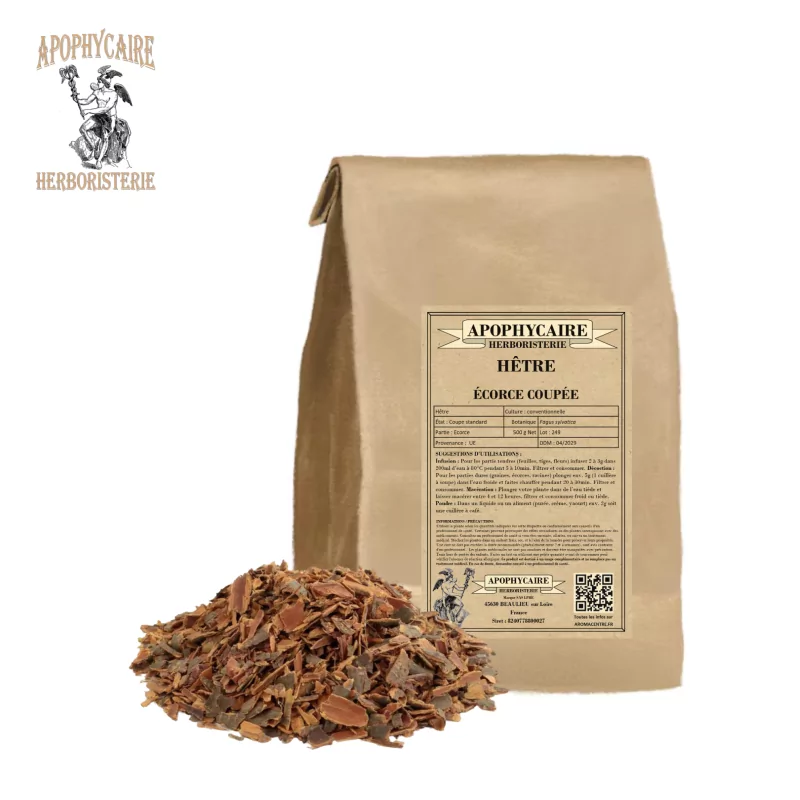
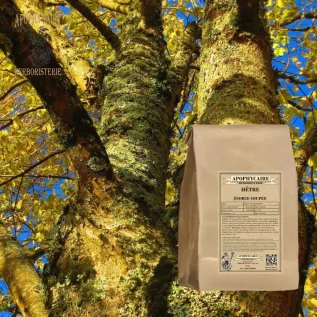
A majestic tree of European temperate forests, the beech ( Fagus sylvatica ) is known for its tannin-rich bark. Used in folk tradition, it is primarily used for skin comfort and purifying treatments for external use.
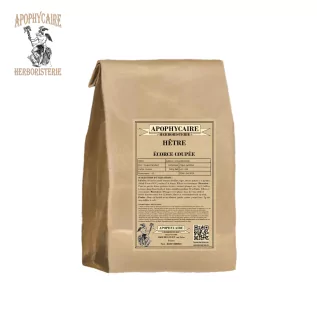
Packaging: 100g to 10kg
If you would like other packaging, dosage forms or other culture origins, please contact us.
 Safety guarantees- Several payment methods
 Returns policy- 14 days to return your products*
 Technical documents- Subject to purchase conditions*
Our Privacy Policy explains our principles when it comes to the collection, processing, and storage of your information. This policy specifically explains how we employ cookies, as well as the options you have to control them.
Cookies are small pieces of data, stored in text files that are stored on your computer or other device when websites are loaded in a browser. They are widely used to "remember" you and your preferences, either for a single visit or for multiple repeat visits
We use cookies for a number of different purposes. Some cookies are necessary for technical reasons; some enable a personalized experience for both visitors and registered users; and some allow the display of advertising from selected third party networks.
Visitors may wish to restrict the use of cookies or completely prevent them from being set. If you disable cookies, please be aware that some of the features of our service may not function correctly
We only collect information about you if we have a reason to do so-for example, to provide our services, to communicate with you, or to make our services better.
We are committed to maintaining the trust and confidence of our website visitors. We do not collect, sell, rent or trade email lists or any data with other companies and businesses. Have a look at our Privacy Policy page to read detail information on when and why we collect your personal information, how we use it, the limited conditions under which we may disclose it to others and how we keep it secure.
We may change Cookies and Privacy policy from time to time. This policy is effective from 24th May 2018.
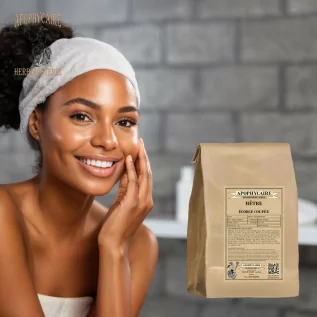
Thanks to its natural richness in plant active ingredients, beech bark is traditionally associated with skin care, supporting skin prone to minor discomfort.
Dried bark, cut into irregular pieces, gray-brown to reddish-brown in color, light woody odor.
Traditionally used to promote skin comfort, soothe redness, and for external purifying care.
Tannins, flavonoids, phenolic acids, lignans.
The beech tree has been revered since ancient times for its robustness and multiple uses. Its bark, renowned for its purifying and soothing properties, is incorporated into many traditional treatments in Central and Western Europe.
The products on aromacentre.fr are not medicines. They are natural, plant-based treatments. All usage advice on our site is for informational purposes only. Any additional requests should be made to a qualified healthcare professional. In accordance with Regulation (EC) No 1924/2006 of the European Parliament and of the Council of 20 December 2006 on nutrition and health claims made on foods, we are unable to publish this information on the site. Taking this product does not exempt you from consulting a doctor or prescribing it. Ask your doctor or healthcare practitioner for advice. Be sure to read the precautions for use before using any medicinal plants. The use of herbal preparations is not recommended without consulting your doctor or pharmacist. The substances they contain may interact with medications prescribed by the patient, reducing their therapeutic effectiveness or causing toxicity. They can also worsen the weakening of the body's vital functions, thus exposing the patient to increased morbidity and life-threatening risks.
Disclaimer
The Apophycaire brand, the aromacentre.fr website, and SAS LPBE disclaim all liability for the use of the information on this site. Each individual is responsible for the use of these products and must ensure that their use is appropriate for their health.
Data sheet
Specific References
En France, les plantes médicinales sont classées par l’ANSM en deux grandes listes :
Ces deux listes peuvent vous être communiquées sur demande.
Ce classement vise à protéger les consommateurs contre les usages non sécurisés. Il est important de se référer à la monographie officielle ou à un professionnel pour tout usage.
Vous pouvez nous contacter par mail à tout moment à l'adresse : contact@aromacentre.fr
Ou nous contacter par le formulaire de contact du site : FORMULAIRE
Main virtue: Traditionally used to support skin health and promote gentle purification.
Main use: decoctions, baths, traditional external preparations.
A majestic tree of European temperate forests, the beech ( Fagus sylvatica ) is known for its tannin-rich bark. Used in folk tradition, it is primarily used for skin comfort and purifying treatments for external use.
Packaging: 100g to 10kg
If you would like other packaging, dosage forms or other culture origins, please contact us.